
Source
Where it comes from.
Refined and deodorised oil from wild-caught Norwegian Arctic herring (Clupea harengus). The herring feed on cold-water copepods, which is how they accumulate cetoleic acid (C22:1 n-11) in their lipid reserves. Production is HACCP-approved for human-grade use, and every lot is traceable and independently tested.
Specification
Typical specification.
| Fatty-acid composition | |
|---|---|
| Total omega-3 | Min 18% |
| EPA | Min 5% |
| DHA | Min 6% |
| DPA | Min 1% |
| Oxidation parameters | |
| TOTOX (total oxidation) | Max 16 |
| Peroxide value | Max 3 |
| Anisidine value | Max 10 |
| Free fatty acids | Max 1% |
| Acid value | Max 2 |
Form · Refined, deodorised · Heavy metals & contaminants, full panel in spec sheet
Applications
What brands use it for.
Supplement brands use herring oil where a distinctive, story-led omega-3 is wanted rather than a commodity concentrate. Its natural cetoleic acid content supports differentiation in a saturated EPA/DHA market. It is supplied as a bulk oil for softgel encapsulation.
Differentiator
What sets it apart.
Herring oil's defining feature is cetoleic acid (omega-11), present naturally at roughly 8-14% by weight, a level warm-water fish do not reach. It is chemically distinct from omega-3 and the subject of a fast-growing body of independent research. Total omega-3 is a minimum of 18%, with EPA at a minimum of 5% and DHA at a minimum of 6%.
Read the full cetoleic acid story →Fatty-acid science
What the fatty acids support.
Heart function
EPA and DHA contribute to normal heart function (EFSA authorised at 250 mg/day in the finished supplement, EU Reg. 432/2012).
Brain function
DHA contributes to maintenance of normal brain function at 250 mg/day (EU Reg. 432/2012).
Vision
DHA contributes to maintenance of normal vision at 250 mg/day (EU Reg. 432/2012).
Cetoleic acid (omega-11)
Norwegian herring is naturally high in cetoleic acid, an emerging research area distinct from omega-3. See the Research page for the published literature.
These reflect established research on the fatty acids the oil contains. Health claims on finished supplements are the brand owner's regulatory responsibility.
Formats
Bulk delivery.
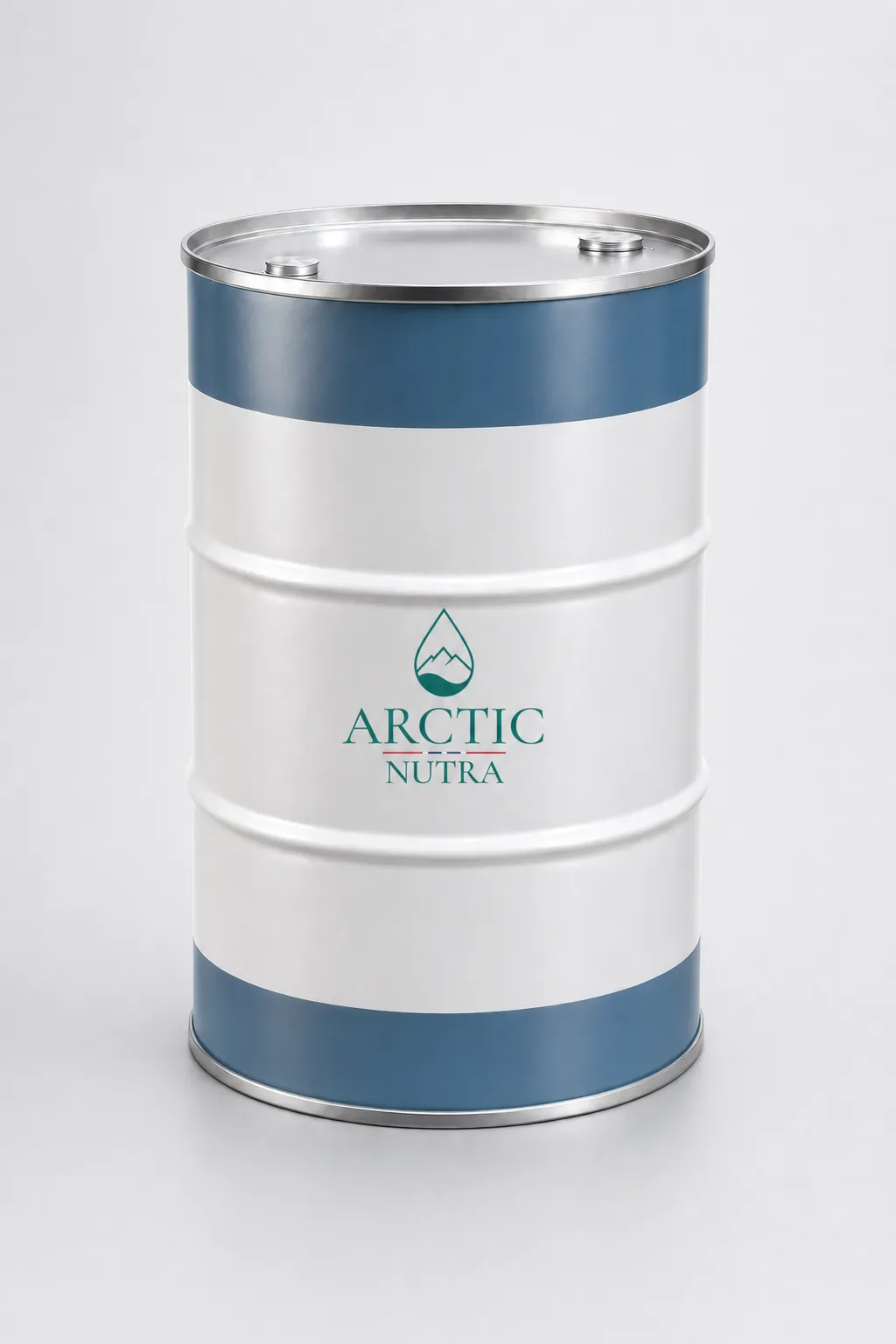
Supplied in bulk as a 200 L steel drum (approximately 190 kg), with a Certificate of Analysis on every shipment.