
Research

The science behind the oil.

Forty years of Norwegian polar marine lipid research - how we refine today, and what we are still learning.

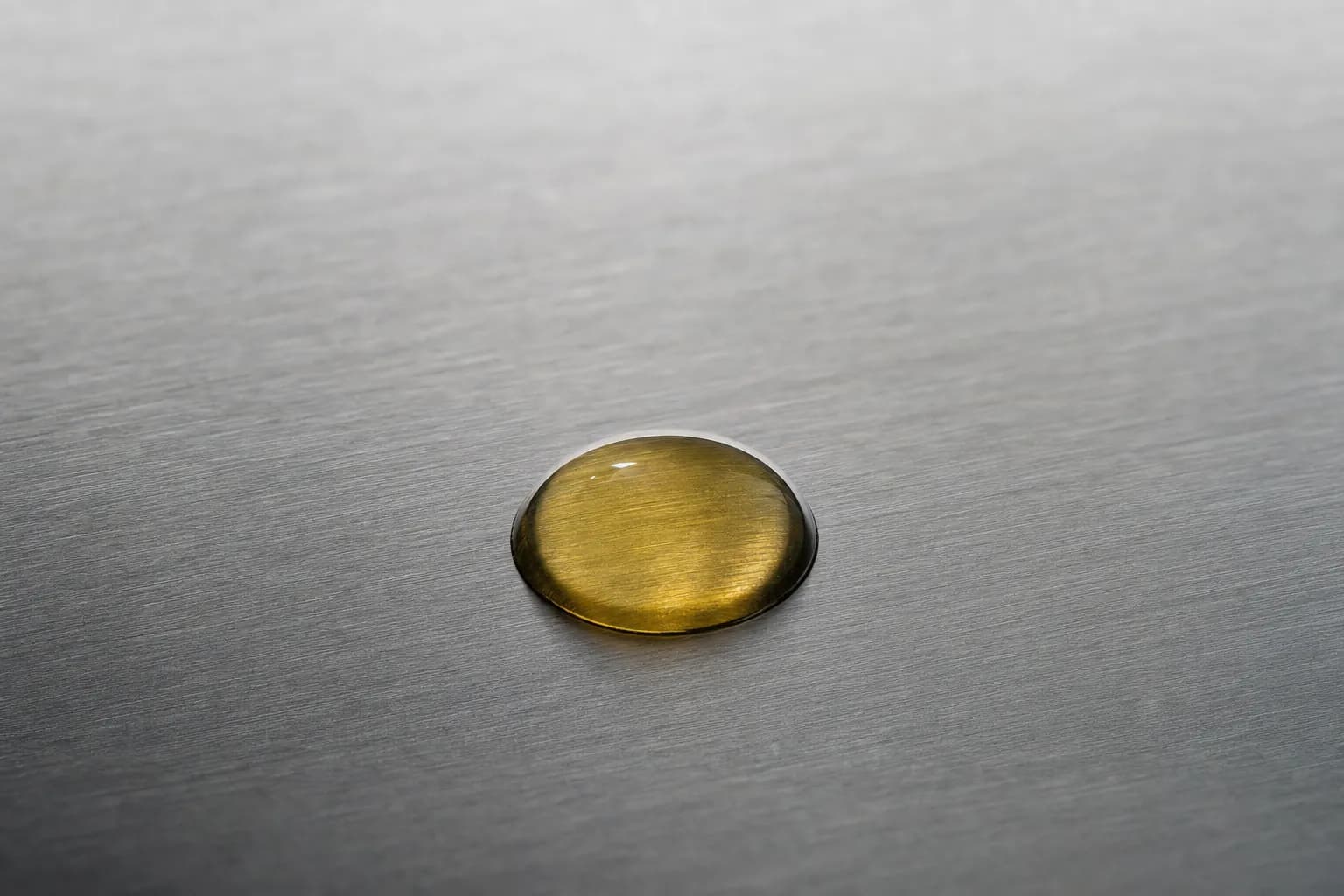
Macro photograph of a single translucent amber droplet of marine fish oil resting on a brushed-stainless-steel laboratory bench surface under cold Nordic daylight

01 · Heritage

A Norwegian
research tradition.

Four decades of marine lipid science, anchored in Tromsø and extended by institutions across the country.

The Tromsø school

Forty years of polar marine lipid research, two researchers at the centre.

In 1986, Professor Bjarne Østerud took up the chair of biochemistry at the University of Tromsø and began a research programme on the biology of marine omega-3 fatty acids. He has published over two hundred peer-reviewed papers across his career, and was awarded the International Society on Thrombosis and Haemostasis Distinguished Career Award (1997) and the King's Medal of Merit in Gold (2006). He remains Professor Emeritus and Scientific Advisor at the Thrombosis Research Center at UiT.

Professor Edel O. Elvevoll, Professor of Marine Food Technology at UiT and former Dean of the Faculty of Biosciences, Fisheries and Economics (2009–2017), has worked alongside him for much of that period. Her domain is the food-technology and processing side of marine oils: how heat, oxygen exposure, and refinement choices affect what actually arrives in the finished product.

Their combined body of work informs our refinement protocol at every stage: which steps need heat, which never should, how oxygen is excluded, how antioxidants are restored, how the result is verified. We do not claim to have funded the research or partnered with the researchers. We claim what is true: it shapes how we handle the oil.

How we use it

Our refinement protocol is built around it.

Two strands of work

What this research has produced.

Strand A

Marine lipid oxidation.

Omega-3 fatty acids are highly unsaturated. The very double bonds that make EPA and DHA biologically valuable also make them readily oxidised by atmospheric oxygen - during processing, during storage, and inside the body. Once oxidised, the molecule generates pro-inflammatory compounds rather than the therapeutic effects it is valued for.

Four decades of work at UiT has documented how this happens, what protects against it, and how to measure it honestly. The thesis that underlies our refinement: marine omega-3 is biologically fragile, and antioxidant protection at every stage determines whether the molecule arrives intact.

Strand B

Cetoleic acid biochemistry.

Cetoleic acid (C22:1 n-11) is a long-chain monounsaturated fatty acid chemically distinct from EPA and DHA. The biochemistry of how it behaves in metabolism (the enzymes that process it, its effect on hepatic lipid handling, its interaction with the body's own omega-3 biosynthesis) has been built over the last fifteen years primarily by independent groups at the University of Bergen and Nofima.

Norwegian Arctic herring is uniquely rich in cetoleic acid via the cold-water copepod food chain. That distinctive fatty acid profile is the reason this strand of research matters to a herring-oil supplier.

The wider community

Three institutions whose work informs us.

Beyond the Tromsø school, the cetoleic-acid evidence base (the science behind our herring oil's distinctive fatty-acid profile) has been built by independent Norwegian research groups primarily in Bergen and at Nofima.

02 · Intellectual property

A patented combination.

Refined herring oil and cold-pressed extra-virgin olive oil, protected in Norway and across Europe.

The science Professor Østerud started in 1986 led to a specific innovation. Industrial refining strips temperature-labile antioxidants from marine oil; the polyphenols in cold-pressed olive oil restore that protective matrix. The combination is patented in Norway and across Europe.

This is one specific innovation in our range - not the whole catalogue. Our other oils are refined to the same release standards under their own protocols.

Oxidograph · 70 °C

Lab bench

46×

Longer oxidation resistance

23 h vs 0.5 h

Cod liver oil aloneFish + olive oil0.5 h23 hμS/cmInduction time (h)

In a standardised oxidation-stability test, the fish-oil + olive-oil combination resisted oxidation for 23 hours versus 0.5 hours for cod liver oil alone.

Østerud & Elvevoll · Progress in Nutrition 2008

Patent-disclosed animal study

Pre-clinical

49%

Atherosclerotic lesions

p<0.001

72.9%

Liver lipids

p=0.026

In the patent's experimental examples (TNO Leiden, ApoE*3Leiden mouse model), the herring + olive combination outperformed the corn-oil control.

Patent NO 344004 · Examples 1 & 2 · Animal model · Not a peer-reviewed human study · Not a health claim

03 · Emerging research

Omega-11.

The cetoleic acid story.

Biology

Where the cetoleic acid comes from.

Norwegian Arctic herring is naturally one of the few fish species with significant levels of cetoleic acid, a long-chain monounsaturated fatty acid (C22:1 n-11), commonly known as omega-11. It is chemically distinct from the omega-3 fatty acids EPA and DHA.

Cetoleic acid originates from the Arctic marine food ecosystem. Copepods, microscopic crustaceans that flourish in cold northern waters, provide the wax-ester precursors that herring metabolise into cetoleic acid and store in their lipid reserves. This natural pathway creates a uniquely Arctic fatty acid profile, reflecting the species, diet, and environment that define Norwegian herring.

The biology

How cetoleic acid ends up in Norwegian herring.

01

Copepod

Cold-water zooplankton

Produces long-chain wax-ester precursors as a survival store in the polar food web.

02

Herring

Clupea harengus

Feeds on copepods and metabolises the wax-esters into long-chain monounsaturated fatty acids.

03

Cetoleic acid

C22:1 n-11 · omega-11

Accumulates and is stored in the herring's lipid reserves, typically 8–14% of total fatty acids.

Warm-water fish do not feed on cold-water copepods in significant quantity and do not accumulate cetoleic acid at comparable levels.

Evidence

What four independent studies have reported.

Most of the published research has emerged in the last fifteen years, primarily from Norwegian institutions. Four findings have been documented.

  1. 01

    In vitro · HepG2 + salmon

    ≈40%

    EPA / DHA conversion

    ALA → EPA / DHA conversion

    Boosts the body's own omega-3 production.

    Cetoleic acid stimulates the conversion of α-linolenic acid (ALA) to EPA and DHA in human hepatic cell cultures - approximately 40% increased production observed.

    Østbye et al. · Br J Nutr 2019
  2. 02

    Meta-analysis · 12 studies · n=288 rodents

    −16%

    Total cholesterol

    Cholesterol metabolism

    Lowers cholesterol in rodent studies.

    A 2023 systematic review and meta-analysis of 12 controlled feeding studies (288 rodents) reported a mean cholesterol reduction of −0.65 mmol/L with cetoleic-acid-rich oils - approximately −16% vs control.

    Mjaatveit & Gudbrandsen · Br J Nutr 2023
  3. 03

    Controlled study · rats · 10 weeks

    −55%

    Plasma triglycerides

    Plasma lipids

    Lowers triglycerides and LDL in rats.

    In a 2025 controlled feeding study, rats given herring oil rich in cetoleic acid (C22:1 n-11) showed 55% lower plasma triglycerides and 45% lower LDL cholesterol than controls, alongside lower total cholesterol and markers of reduced inflammation. An animal study, not a human trial.

    Nundal et al. · Front Nutr 2025
  4. 04

    Pilot RCT · placebo-controlled · n=28

    →8.93%

    Omega-3 index (from 6.85%)

    Omega-3 status · human

    Raises the omega-3 index in people.

    In a double-blind, placebo-controlled pilot, 28 healthy women took a cetoleic-acid-rich oil for three months. Their omega-3 index rose from 6.85% to 8.93% - comparable to an oil with far higher omega-3 content - while the placebo group did not change. The same trial also recorded reduced facial skin redness, a marker of inflammation.

    Mildenberger et al. · PLEFA 2024 · NCT05128240
Regulatory framing

How we cite this work.

Cetoleic acid does not currently have a European Food Safety Authority authorised health claim. The research summarised above is drawn from peer-reviewed publications by independent researchers. Arctic Nutra cites this work as the scientific context for our herring oil's fatty acid profile, not as a product claim. Health claims on finished supplements are the brand owner's regulatory responsibility. See the herring oil specification →

Read the full cetoleic acid story

Common questions

About the science.

What is cetoleic acid?

Cetoleic acid is a long-chain monounsaturated omega-11 fatty acid (C22:1 n-11) found naturally and abundantly in Norwegian herring oil, typically 8-14% by weight. It is distinct from the omega-3 family and is an emerging area of marine-lipid research.

Is omega-11 a type of omega-3?

Omega-11 and omega-3 are different fatty-acid families, named for where the first double bond sits: eleven carbons from the methyl end for omega-11, three for omega-3. The main marine omega-11 is cetoleic acid; the main marine omega-3s are EPA and DHA.

Preserving Freshness Through Low Oxidation

Our refining process is designed to minimise oxidation and preserve oil quality throughout production. One of the most widely recognised measures of freshness is TOTOX (Total Oxidation Value), which reflects both primary and secondary oxidation in a single indicator. By carefully controlling every stage of refining, we consistently achieve TOTOX levels that meet or exceed leading industry quality standards.

Are you affiliated with UiT researchers?

No. Forty years of Norwegian polar marine lipid research, including work by Bjarne Østerud and Edel Elvevoll at UiT The Arctic University of Norway, informs our refinement approach, but Arctic Nutra is not affiliated with the university and does not claim its researchers endorse our process. We cite their published work as research, not partnership.

Last reviewed

Have questions? Get in touch.

Response within 1 business day · Sample lead time 5 days